Luís Duarte d’Almeida – Arguing A Fortiori

Political Theory Research Group seminar series: 24 Feb 2016

Photo: Thinkstock

Photo: Thinkstock

Lawyers and courts frequently deploy a fortiori arguments, but rarely disclose the inferential steps on which they are made. This has created opaqueness in the law, and made it difficult to parse valid from fallacious cases of a fortiori reasoning. In his paper, d’Almeida attempts to build a general framework against which potential cases of a fortiori argument can be tested. Continue reading

David Miller – The Duty to Rescue Boat People

Photo: Wikipedia

Photo: U.S. Navy

What obligations, if any, does a state in Europe have towards boat people attempting dangerous sea crossings?

This was the question Professor David Miller from Oxford University addressed on 4 February 2016 in a well-attended lecture hosted by Edinburgh University’s Global Justice Academy and Just World Institute.   Continue reading

Rowan Cruft – The Individualism of Human Rights

Political Theory Research Group seminar series: 10 Feb 2016

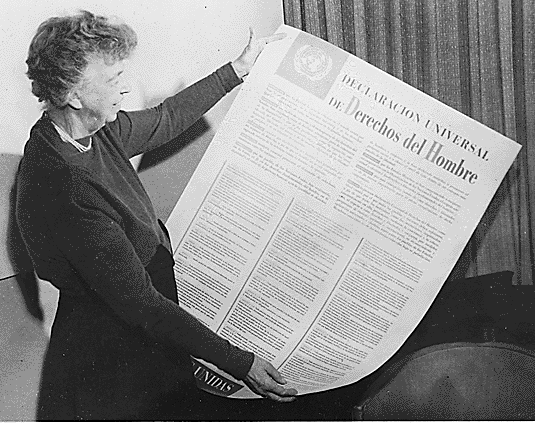
Eleanor Roosevelt and the Universal Declaration of Human Rights Photo: Photo: Unknown - Franklin D Roosevelt Library website

Eleanor Roosevelt and the Universal Declaration of Human Rights
Photo: Unknown – Franklin D Roosevelt Library website

Rowan Cruft’s paper “The Individualism of Human Rights” explores the thesis that human rights are justified by what they do for individuals, rather than for collectives like ‘humankind’ or ideals like ‘beauty’. This means that a human right is always grounded in a feature of the individual right-holder (such as an interest, need, freedom, or capability). Rowan offers ‘the right to political participation’ as an example – the importance of your freedom of political participation is enough to ground the right, aside from any wider benefits of political participation to society or political institutions. Continue reading

Tim Hayward – A Global Right of Water

Political Theory Research Group seminar series: 27 Jan 2016

Photo: United Nations

Photo: United Nations

This week’s PTRG saw Professor Tim Hayward present his paper ‘A Global Right of Water’.  In the paper, Tim answered several important questions such as: whether a right regarding safe and clean water is a ‘basic right’ without which no other right can be enjoyed; who has what responsibility to fulfil the material demands that this right entails; whether the traditional paradigm of thinking is appropriate to address real ecological challenges of a changing world; what political institution would be needed to realise everyone’s secure access to safe and clean water. Continue reading

Up to Ten Fully Funded PhD Studentships at Political and International Relations in Edinburgh

Up to 10 fully funded PhD scholarships in Politics & International Relations, Edinburgh

Applicants interested in work in political theory/political philosophy are strongly encouraged to apply.

The Political Theory group at Edinburgh is a large and diverse comunity of academics, post-doctoral fellows, and PhD students. We hold weekly research seminars and regular conferences and workshops. We host the Just World Institute which, in addition to research activities, has a flourishing programme of public engagement events: http://www.sps.ed.ac.uk/jwi Continue reading

Monumental Legacies and Symbolic Humiliation

As the recent controversies surrounding Cecil Rhodes’ statues in South Africa and the UK have shown, public constructions attest to political regimes’ desire to imprint their version of history on the country’s landscape and, more importantly, on the memory of citizens. Statues, memorials and monuments set in stone a certain view of the past, usually in glorious and heroic terms. Hierarchies of all kinds (political, social, racialised, gendered) are reflected in – and reproduced through – public art, one of the many ‘voices’ through which the state speaks. What is celebrated or commemorated is as significant as what is forgotten: defeats, reprehensible deeds by the nation, as well as marginalized groups are usually omitted from the material representation of the official story.

voortrekkermonument2

The Voortrekker Monument, South Africa

Continue reading

Yukinori Iwaki – Temporal Debt, Ecological Debt, and the ‘Absolute’ Harm to the Disadvantaged

Political Theory Research Group seminar series: 13 Jan 2016

Photo: International Labour Organization

Photo: International Labour Organization

This week’s PTRG saw Yukinori Iwaki present his paper ‘Temporal Debt, Ecological Debt, and the “Absolute” Harm to the Disadvantaged’. In the paper, Yuki introduces two novel concepts to explain how the world’s advantaged population are complicit in absolute harm towards the disadvantaged: the accumulation of ‘temporal debt’ and ‘ecological debt’. He identifies five components of human well-being whose denial constitutes harm: continued life, bodily health, bodily integrity, practical reason, and human affiliation. Subsequently, he argues that time and space are the overarching dimensions within which a human lives her life, and therefore infringements on these two dimensions lead to harm. Crucially, the paper attempts to locate the origin of this harm. Instead of simply noting the existence of the harm, Yuki asserts that the harm to the disadvantaged stems from injustices and debts caused by the advantaged. Thus, he enters well-known debates in global justice, mostly associated with Thomas Pogge, on the relation and responsibility of global injustices but with a more comprehensive account of how and why these injustices (or harms) occur. Continue reading

Philanthropy and Social Justice Conference

Many of us give time or money to good causes. Often we have a personal motivation for the giving, such as raising funds for our child’s school, or for a medical charity that supports a sick friend or relative. But many of us also give to those with whom we have no connection: the victims of a far-away natural disaster; or those in distant parts of the world suffering harsh poverty. Individuals of limited means and the staggeringly wealthy give freely to help others in need. Carnegie’s wealth funded many libraries and other educational establishments around the world; the Bill and Melinda Gates Foundation helps those in developing countries suffering from disease and poverty. Continue reading

Philanthropy and Development

5296658521_52e327f871_o

Photo: Gates Foundation.

By Paul Spray

I come from a particular context. I have worked all my life in international development – for developing country governments, for international NGOs, for the British government Department for International Development, and (albeit only for 18 months) for a philanthropic foundation. I am currently a Board member of Christian Aid.

  1. What’s going on: Philanthropy and development

There has been a rapid increase in the money given by Foundations for international development. In 2011 philanthropic North-South flows from OECD countries were at least US$59 billion, and probably a lot more. That’s already half of governments’ official aid. Continue reading

 Retrieving the Heart of the Market?

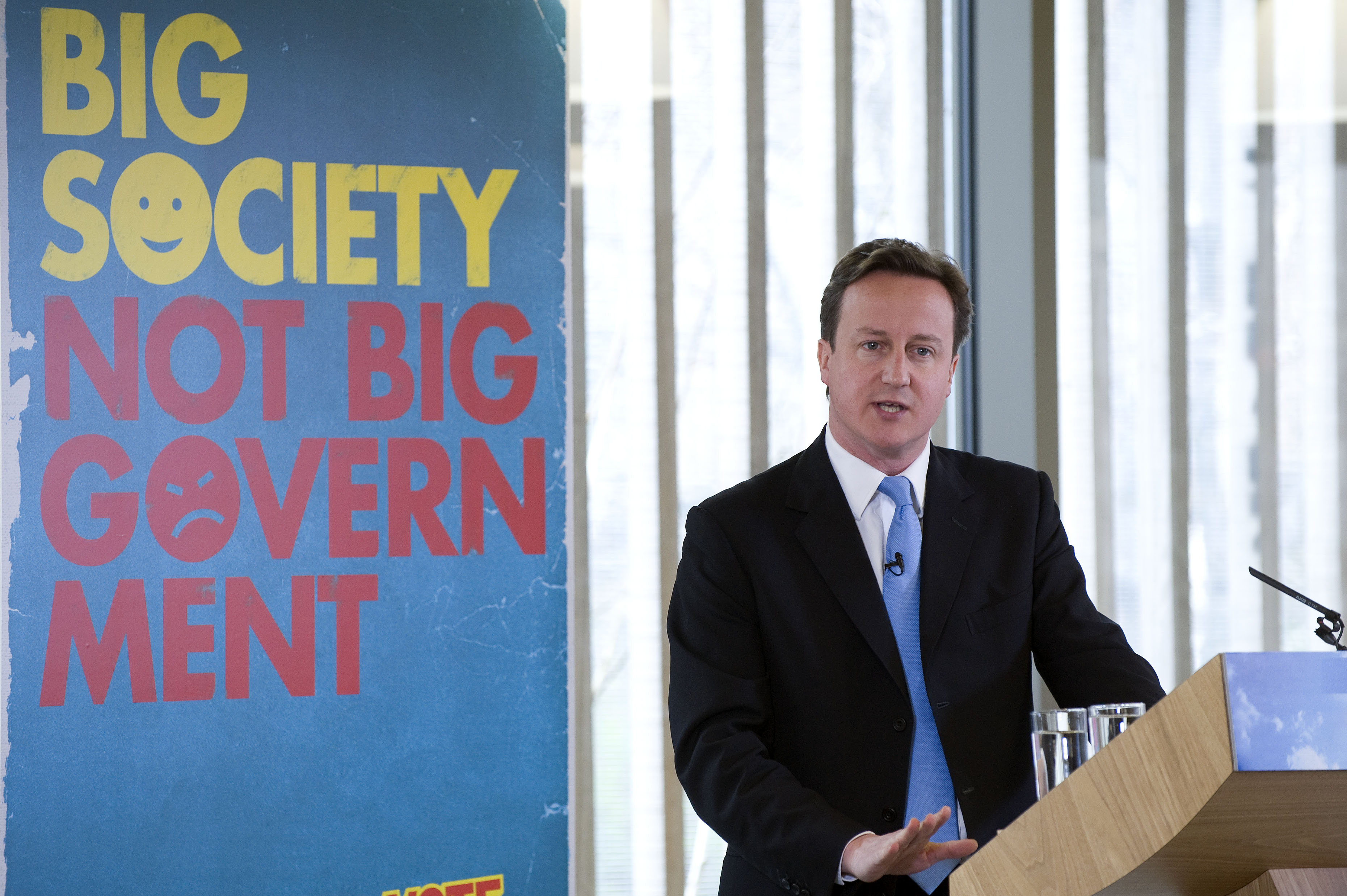
Leader of the Conservative Party David Cameron delivers a speech at The Conservative Party Big Society conference in central London, Wednesday March 31, 2010. Photo By Andrew Parsons

Photo: Andrew Parsons.

By Emma Dowling

In September 2014, the G8 Social Investment Taskforce (established by the UK presidency of the G8) produced a report entitled The Invisible Heart of Markets, outlining a strategy for G8 member states to develop a social investment market, invoking the metaphor of the market’s ‘invisible hand’ invoked by the 18th century political economist Adam Smith (1776) in The Wealth of Nations. According to dominant readings of Adam Smith’s theory, it is through the pursuit of one’s self-interest that social activity is steered via a market in beneficial ways for the collective good. The quip in the G8 Social Investment Taskforce report then seems to want to suggest that the market not only has an invisible hand that steers it, it also has an invisible heart that beats for the good of society. Continue reading