Five Bad Arguments Against Divestment

Photo: Augustine Ruiz.

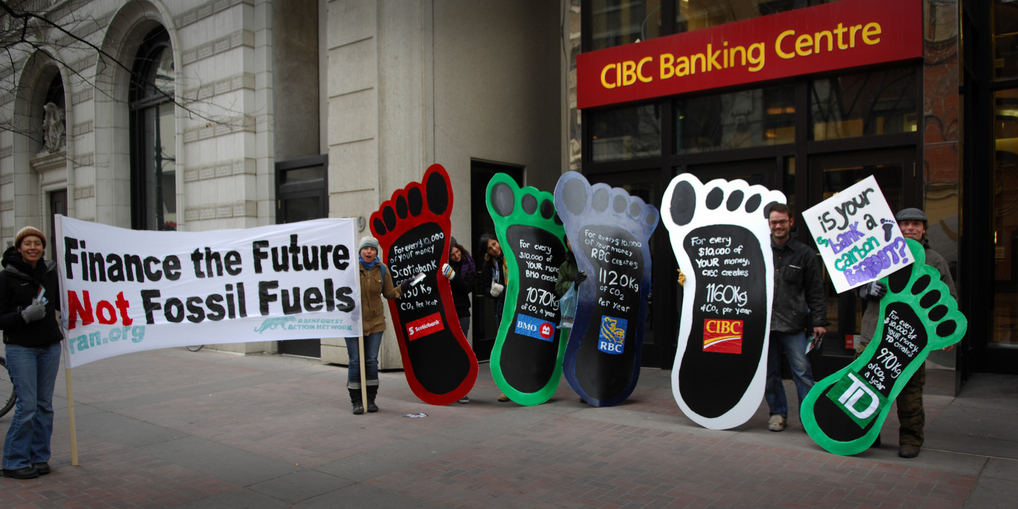
Last year, Glasgow University became the first university in Europe to commit to fossil fuel divestment. Since then SOAS and Bedford have followed suit. Who, one wondered, would be next? The obvious answer was Edinburgh. Edinburgh has long prided itself on its ethical credentials. It was the first university in Europe to sign up to the UN Principles of Responsible Investment. In 2014, it set up the Department for Social Responsibility and Sustainability, which swiftly launched a consultation on investment policy. The Just World Institute contributed by issuing a response document and collaborating in a packed out public debate. Finally, in the autumn, the matter moved to another level: the university set up a committee to formally consider the future of its £290 million endowment.   Divestment seemed like a real possibility. Continue reading

Should Scotland vote for what is best for Scotland?

Salmond

Photo: Scottish Government.

On the face of things, the positions taken by the Yes and No camps in the referendum campaign would seem to be diametrically opposed. Yes argue that an independent Scotland would be better off: it would be richer, stronger, greener and fairer, resembling Norway or Sweden as much as the UK. No argue that an independent Scotland would be worse off: it would be poorer, jobs would head south and it would lose, along with its EU membership, the disproportionately large influence it has internationally by being part of the UK. Yet despite the appearance of opposition there is something that Yes and No have in common, which is that both are offering answers to the same question: what is best for Scotland?

But why think that “what is best for Scotland?” is the relevant question to ask? Here’s a strikingly different approach we could take. We could ask, “What is best for everyone in the world, no matter where they live?” Asking this question would force us to think beyond Scotland’s borders and take into account the interests of all those upon whom the referendum will have an effect. Clearly, the outsiders who will be most affected are those living in the rest of the UK. In the event of a Yes victory, politics within the rest of the UK is set for a shake up. Continue reading

Immigration is a human right

Photo: Motograf

Freedom of movement in Europe is under attack and not just in the UK. Earlier this year, the Swiss voted to introduce quotas for EU immigration, thus invalidating the Swiss-EU Free Movement of Persons Agreement. The Belgium government has sent thousands of letters (2,712 in 2013) to out-of-work EU immigrants, informing them that they have become an “unreasonable burden” on the state’s benefit system and as such must leave or face deportation. The German government is thinking of following suit, with a proposal to deport EU migrants who have not found work within three months.

Much has been written on what is motivating this wave of anti-immigration politics. Here, let us ask a different question: what motivates those who remain pro-immigration? Why should anyone think that freedom of movement in Europe is something worth defending? Continue reading

Musing on air travel and inequality in the sky: are the odds high?

By Kenneth Amaeshi

Imagine sitting for 13 hours on a flight from London to Shanghai in economy class. The space is limited. Leg room is constrained. Seat pitch is 30-31 inches compared to a 6ft fully flat bed and 6ft 6” fully flat bed in the business class and first class sections, respectively. The section is crowded; and to get to your seat, you would have been inadvertently humiliated by a system that is well versed in glamorising inequality. The logic of the airline business is simple and straightforward: the more you can afford to pay, the more preferential treatment you receive. This applies to first-class and business class passengers, respectively, in particular. Their progress through the airport is significantly fast-tracked. Continue reading

Why shouldn’t Scottish prisoners get to vote?

ballot

With the referendum for Scottish independence upcoming, my question has three possible contexts of application: it could be about the position of Scottish prisoners as nationals of the United Kingdom in political elections; it could be about Scottish prisoners under independent Scottish jurisdiction; or it could concern the say of Scottish prisoners in the decision on which of those other two contexts applies after September.  This last question is particularly interesting because it opens onto some deeper issues about what it means to be part of the Scottish people at this time of potential constitutional change.

I was prompted to this reflection following a recent group visit to HMP Shotts, at the invitation of prison governor Jim Kerr, to learn about the nature and conditions of prisoners’ work there. (It was an enlightening experience, as Liz Cooper has described in her blog).  The topic of voting didn’t come up, but more substantial issues about prisoners’ relations to the wider society did. Continue reading

Is conflict-free fair enough?

My role at the university is about working conditions and workers’ rights in university supply chains, to date referred to as ‘fair trade’. I was, therefore, interested to see two events organised by Politics and International Relations colleagues exploring questions of fairness in the extraction and trading of raw materials. On 26th February 2014, the university hosted ‘From Conflict Minerals to Fair Phones? A Roundtable on Resource Governance’, and on 27th February 2014, the Scottish Parliament hosted ‘#Britain and Africa after 50: Fair Trade, Fair Extraction, Fairplay?’, with both events bringing together practitioner and academic expertise on ethical questions related to mineral extraction and trade in Africa. Fair trade is not always a popular term, and is not always taken seriously, but whatever label we use, initiatives working to increase income levels and improve livelihoods for poor people around the world are clearly important.

conflict minerals parliament discussion Continue reading

Investment in reality

[Here we re-blog the third of Tim Hayward’s pieces for the Global Justice Academy on what socially responsible investment means for the university.]

To think about the fundamental principles that should guide a responsible investment policy it is helpful to get back to conceptual basics. So I shall start with a moment of philosophical reflection.

Reality is all of what we apprehend, in our human lives, under the forms of space and time.  Our lives themselves have objective aspects (what we observably do) and subjective ones (how we interpret our experiences).  Investment is, in the broadest sense, a putting of oneself into some venture or commitment: we invest our energies and our time in activities whose objective fruits yield what we apprehend, subjectively, as benefits.  Where an abundance of those benefits is achieved, we have a circumstance that can be referred to as wealth.  This has both objective and subjective elements: what has been objectively assembled is subjectively appreciated.  But what of investment in a narrower sense, that of bestowing money on others that they may in due course return the sum and, hopefully, with more besides?  Is this a special case of the general idea or something rather different? Continue reading

The Crimean crisis: justified secession, Russian aggression or both?

The current standoff in the Crimea raises a number of philosophical problems.  The first is whether regions within countries have a right to secede and if so under what conditions.  In their condemnation of the deployment of Russian troops, Western politicians have been keen to stress the importance of Ukrainian territorial integrity.  But why should we judge Ukrainian territorial integrity so important?  Most people seem to think that if the majority within a defined region wish to secede, that region has a right to secede, perhaps especially if has a history of independence and if the majority of its inhabitants are of a distinct ethnic or national group.  Thus most people seem to think that David Cameron was not only right, but also obligated, to sign the Edinburgh Agreement that paved the way for the Scottish independence referendum.  In their view, Scotland has a right to secede.  As I indicated in a previous article, I am far from convinced, but if we assume the truth of this pro-secessionist sentiment, the implication seems to be that Crimea also has a right to secede.  Continue reading

University investments and economic growth

In its current consultation on its investment policy, the University of Edinburgh reminds us that its Strategic Plan aims to make a socially responsible contribution to the world in three key areas: health, economic growth, and cultural wellbeing.  The social reasons for seeking to promote health and cultural wellbeing are readily understandable, but what about economic growth?  Unlike health or wellbeing, which are values counted among fundamental human rights, economic growth is not a direct good for people.  It is at most a proxy for measuring the potential means to achieve the wealth that may in turn be good for people.

The assumption that economic growth is a good thing implies a judgement about macroeconomic morality.  I want to examine that assumption and how it relates to the principles of responsible investment. A commitment to such principles means being prepared to forego a financial return if that could only be achieved at the expense of unacceptable costs being inflicted on people or planet.  The University of Edinburgh has already taken this kind of stand with regard to investments in tobacco and drones technology. It is thus committed to certain principles of microeconomic morality. Continue reading

Academic freedom and social responsibility: conflicting factors in a university’s ethos?

As Edinburgh University publishes a consultation paper on responsible investment, JWI director Tim Hayward offers some reflections (re-blogged from Global Justice Academy Blog)

image

Why should a university be socially responsible?  A question thrown into relief by the current debate over universities’ investments concerns the social role of the university and the relation of that to its core academic activities.  In a thoughtful response to an earlier blog where I argued in favour of the fossil fuel divestment campaign, a critic, Nick Geiser, objects that the campaign is ‘forcing universities to “take a side” in the climate change debate and committing the university to a particular set of political objectives.’  This, he maintains, ‘is a radical attack on the principles of scholarship and academic freedom and threatens open debate in higher education.’  Since that sounds like a damaging charge, I’d like to consider more carefully why we should suppose that urging a university to take a decision that may be perceived to have a distinctive political colour is necessarily a threat to academic freedom or any other core value of a university. Continue reading