Security in an independent Scotland

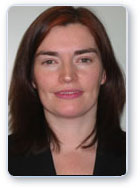
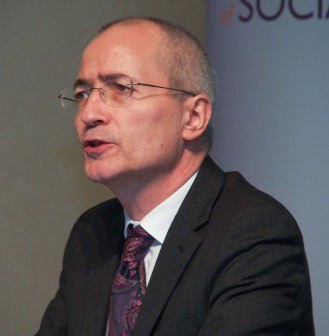
Dr. Andrew Neal, University of Edinburgh

Dr. Andrew Neal, University of Edinburgh

In this piece, Dr. Andrew Neal argues that security is about the perception of threats, rendering an objective assessment of Scotland’s prospects for security impossible. However, he notes that an independent Scotland may emulate the UK’s expansive approach to secruity threats and risks or adopt a narrower approach. 

An objective analysis of the prospective security situation of an independent Scotland is impossible. There is no objective or settled meaning to the term ‘security’, even in the current governmental and constitutional arrangements of the UK. It is thus not possible to simply produce an objective and comparative list of ‘threats’ to the UK and an independent Scotland. The real question is how governments perceive threats and what they attempt to do about them. The question is therefore not whether an independent Scotland would face different threats to the rest of the UK, but how the government of an independent Scotland would perceive threats and what it would attempt to do about them.

At present, the UK government does not have a coherent approach to ‘security’, and there is no reason to think that an independent Scottish government would be any different. Governments of modern states are sprawling, complex beasts. Getting them to do anything in a coherent, unified way is extremely difficult, especially on issues that span different parts of government, maybe even all parts of government.

Even in the constitutional status quo, it is not clear that current Scottish arrangements provide adequate scrutiny and oversight of every aspect of ‘security’ that could affect Scotland.

There are currently two interpretations of ‘security’ in play within the UK government: the narrow and the broad. The narrow interpretation adopts a traditional understanding of security, in which threats are foreign, military, and state-based. The corresponding parts of government in the Foreign Office, the Ministry of Defence and 10 Downing Street deal with those threats. The National Security Council chaired by the Prime Minister has largely focused on traditional foreign and defence issues, such as the Libyan intervention.

At the same, an alternative broad interpretation of security is being developed elsewhere in the UK government. The UK government’s counter-terrorism strategy document (CONTEST) lists 29 departments and agencies as playing a role in this strategy. The most recent version of the National Security Strategy (NSS) goes further by shifting from ‘security’ to an encompassing list of ‘risks’. These stretch from international terrorism and overseas military crises to border transgressions by illegal immigrants and disruptions to fuel and food supplies. The manifestation of this broad interpretation of security is that security is proliferating across all areas of government, far beyond the traditional narrow remit of foreign and defence policy.

Much hinges on the extent to which an independent Scotland would truly be an ‘independent’ state.

The conclusion we must draw is that there is no single meaning of security in the UK. The reality is that disparate parts of the government perceive ‘threats’ and ‘risks’ differently and develop policies to deal with them in a piecemeal fashion. Whether this is good or bad depends on ones’ view on the relative dangers of security threats on the one hand, or a unified security state on the other.

Would it be different in an independent Scotland? The Scottish government might not perceive threats and risks in the same way. Given the haphazard nature of threat perception in the UK, there is no reason to think that Scotland would independently come up with same list of threats and risks. Scottish politics has been less hostile to immigrants than Westminster politics. The Scottish government might not see immigration as part of the bundle of risks specified in the NSS that includes terrorism, organised crime and smuggling.

My current research on parliamentary security politics at Westminster analyzes this unsettled and changing state of security affairs. The uneven creep of ‘security’ across different areas of government is reflected in a larger number of parliamentary committees handling security issues. Half a dozen now do so regularly (Intelligence and Security, Home Affairs, Foreign Affairs, Defence, Joint Committee on Human Rights, Joint Committee on the National Security Strategy). At least half a dozen more discuss security questions on a less frequent basis (e.g. Lords Committee on the Constitution, Energy, Public Accounts, Energy and Climate Change, Science and Technology, Health). If we were to take the comprehensive list of risks in the NSS seriously, we could argue that every part of government and parliament will find itself dealing with security issues at some point.

Whatever ‘security’ is, it already reaches far beyond the ‘reserved areas of government’ that Holyrood currently leaves to Westminster (e.g. foreign affairs, defence, counter-terrorism). The proliferation of ‘security’ across Westminster has in no way been mirrored in Holyrood. Even in the constitutional status quo, it is not clear that current Scottish arrangements provide adequate scrutiny and oversight of every aspect of ‘security’ that could affect Scotland. Without knowing which new ministries and parliamentary committees an independent Scotland would create, it is difficult to know how ‘security’ would play out in the new constitutional context.

And what of a Scottish House of Lords or equivalent? The House of Lords has often put a brake on the excesses of security politics at Westminster, such as extended pre-charge detention for terrorist suspects. In large part this is thanks to the many lawyers and a scattering of former security officials in its ranks. We do not even know if an independent Scotland would have an upper house of parliament, but we can be certain that it would not be an unelected body of experts and political appointees like the Lords and so would probably not have the same legal and security expertise.

Much hinges on the extent to which an independent Scotland would truly be an ‘independent’ state. If it does not free itself from the current security model at Westminster, we can expect security to be a lengthening rope pulled in several different directions at once. If it does not depart radically from the current Holyrood model, we can expect a continuing lack of scrutiny and oversight. The question of security in an independent Scotland is not a question of what objective threats it would face. It is a constitutional question. The character of security in a modern state is a product of its constitutional arrangements. Leadership, officialdom, parliament; these all shape ‘security’ in different, conflicting ways. Sometimes security shapes them.

Dr Andrew Neal is a Lecturer at the School of Social and Political Science at the University of Edinburgh. He blogs at securitypolitics and tweets @andrewwneal

Posted in Defence and Security | Leave a comment

Scotland as a ‘good bet’ for Nato

Colin Fleming, University of Edinburgh

Colin Fleming, University of Edinburgh

Dr. Colin Fleming writes on the possibility of Nato membership for an independent Scotland, noting that while Scotland could exist outwith Nato, independence outside the strategic alliance would come at a political and financial cost.

This week Nato are conducting joint operational exercises off the Scottish coast, from April 15-29. This comes just after the recent trip by Alex Salmond to America and his lecture to the US think-tank the Brookings Institute where the First Minister said that Scotland’s international partnerships would remain unchanged in the event of independence. The nation’s alliances with the US and other nations would endure while Scotland would become an independent and active member of organisations, ranging from the European Union and the United Nations to Nato.

However, Nato is correct not to publically signal that Scotland would simply join the alliance, not least because to do so would be to undermine the UK state – one of its key members. Rocking the status quo is simply not something the US or Nato will do at this stage. Yet, neither is this somehow an indication that Scotland would have trouble being admitted to the alliance should the Scottish public vote Yes in next year’s referendum.

Nato provides a security guarantee which Scotland could not attain on its own. Membership would also have the added importance of plugging Scotland into regional and international security networks, something that will be expected from us by the majority of European states. Scotland could exist without Nato – there is no immediate territorial threat to the nation – but to do so would be much more costly financially and would make it far harder for Scotland to integrate with its key partners – not least the rest of the UK (RUK).

Integration is important in terms of future defence-sharing prospects with RUK, as it is for its possible future relationship with the Nordic states. Nevertheless, just as there are incentives for Scotland to join Nato, so too are there significant reasons why Nato would want Scotland to become a member of the organisation. Not least, Scotland’s geostrategic position marks it out as a pivotal player with its own strategic interests in the Atlantic.

As Scotland sits in the middle of the North Atlantic it would be odd if it weren’t welcomed into the North Atlantic Treaty Organisation. This area is increasing important when it comes to strategic interests globally due to the potential for security concerns relating to Russia and China. Our joining existing security networks – both transatlantic and regional, such as the Nordic Defence Coperation pact – will therefore be highly desirable to Scotland’s neighbours.

We should also not undervalue the importance of existing Nato infrastructure in Scotland which Nato will want to maintain. However, perhaps more important is Scotland’s ability to fill gaps in the existing security framework. The inclusion of Scotland is more likely to enhance the security of the North Atlantic area, and we would be an important partner for regional allies as well of the Nato alliance.

Put simply, the UK’s focus towards the Middle East has resulted in a security gap in the Atlantic. This security gap has been exacerbated by ongoing MoD austerity measures which have prioritised finances on fighting wars in Iraq and Afghanistan at the cost of a properly maintained readiness for maritime operations in the Atlantic. The early decommissioning of the Nimrod and its cancelled replacement has left a hole in intelligence and surveillance across the region which is easily exploitable for those with the know-how. Scotland could, and should, plug this gap in the event of independence. Indeed, at present this surveillance role is conducted by Nato, which currently operates Maritime Patrol Aircraft from Leuchers and Lossiemouth for this very purpose. It would be highly attractive for Nato to retain these assets post-independence. A properly conducted negotiation between Scotland and RUK, where Scotland does not try to diminish the UK’s current standing, could lead to Scotland filling an important function, which focuses north instead of south.

The SNP position, that an independent Scottish state will ban nuclear weapons from Scottish territory, reflects the mood of the Scottish public in regard its own position on nuclear weapons. However, Scotland being nuclear-free is unlikely to be a serious impediment to Nato membership. Norway and Denmark have also banned nuclear weapons and both are important members of the alliance – fulfilling key tasks in Afghanistan and Libya. Furthermore, Scotland’s refusal to host nuclear weapons on its territory – as long as it acts responsibly to the concerns of RUK – will be balanced by what it can offer elsewhere. In light of changing geopolitical interests to our north as well as south, Scotland would be a good bet for Nato.

Dr Colin Fleming is a Research Fellow in Politics and International Relations at the University of Edinburgh. This piece was originally published in the Sunday Herald on 14 April 2012.

Posted in Defence and Security | 1 Comment

Writing off Trident

Dr. John MacDonald reflects on the possibility of a nuclear-free Scotland following independence, arguing that a recent constitutional amendment in Mongolia might serve as a model to prevent the maintenance and deployment of nuclear weapons. 

In Washington DC last Tuesday, Alex Salmond reiterated his commitment to a nuclear-weapons-free independent Scotland.  In articulating this to an American audience, his conviction on this issue appears to be undimmed.

Salmond has recently referred to how a written constitution might help an independent Holyrood Government to achieve this.  As he recently stated: ‘Scotland is currently the home of Western Europe’s largest concentration of weapons of mass destruction. They are based on the River Clyde, within 30 miles of Scotland’s largest city. A constitutional ban on the possession of nuclear weapons would end that obscenity.’

Are his convictions justified?  Could a written constitution really help in the removal of nuclear weapons from an independent Scotland?

The short answer to this is ‘Yes’.  For those who might require convincing, there are pertinent examples we can look to.  Improbably, perhaps, Mongolia is one such example, a benchmark for how a state can enshrine nuclear weapons opposition into legislation which is then used to gain formal recognition by the international community.  The government of an independent Scotland, and those charged with scripting a written Scottish constitution, would do well to look to the Mongolian experience as an example of good – and effective – practice.

Before detailing the Mongolian experience, we might first consider the difficulties a newly independent Scotland would likely face on the nuclear weapons front, difficulties which might make the construction of a constitution all the more pressing.

One thing is certain:  London and Washington would be desperate not to undermine the Anglo-American nuclear status quo and so a newly independent Scottish Government would likely come under great pressure to retain British nuclear weapons.

Interestingly, the 1970 Treaty on the Nonproliferation of Nuclear Weapons (NPT) complicates things somewhat.  Since the NPT designates only five nuclear powers – China, France, Russia, the United Kingdom and the United States – an independent Scotland would not be recognized as a state entitled to possess nuclear weapons.  While this will be music to the ears of many Scottish citizens, it doesn’t address what would actually happen to Scottish-held nuclear weapons in the event of a ‘Yes’ vote.  There will be no easy banishment of these weapons: the logistics are complicated and the British government has raised concerns over the financial cost of any re-siting of weapons from their current Scottish housings.

One possible – and extremely delicate – solution would be for Edinburgh and London to agree to continued ‘British management’ of the Faslane and Coulport nuclear bases; they would effectively be ‘sovereign’ UK nuclear bases on Scottish soil.

Whilst this arrangement would undoubtedly spark apoplexy throughout Scotland, it is a scenario recognised in international legislation:  under Article 1 of the NPT, a nuclear weapons state can site its nuclear weapons in a non-nuclear weapons state as long as the weapons and their housings are under full control of the nuclear weapons state.

Given the financial and logistical difficulties associated with relocating British nuclear weapons from Scotland, this arrangement may well appeal to both Downing Street and the White House.  Both would likely apply great pressure on Edinburgh to assent and various ‘attractive propositions’ would be made to the Scottish Government, ranging from generous recompense to assistance in helping Scotland through its various post-independence international negotiations.

The good news for nuclear weapons opponents is that a written Scottish constitution could effectively blunt any pressures that London and Washington might conceivably apply.  Again, the NPT is significant.

Article VII of the NPT provides a proven pathway for states wishing to establish themselves as internationally recognised nuclear-weapon-free-zones (NWFZ).  Mongolia is just one state that has taken this path.  Significantly, written legislation played a key part in achieving this.

Addressing the UN in September 1992, the Mongolian President Punsalmaagin Ochirbat declared his newly-independent country a nuclear-weapon-free-zone.  This announcement was set against the backdrop of a collapsing Soviet Union, Russian troop withdrawals from Mongolia, and post-Communist Mongolia’s wish to normalize relations with China.  Within less than a year, Mongolia’s declaration had been officially recognised and welcomed by both China and Russia.

Between 1993 and 2000, Mongolia’s efforts to be internationally recognised as a NWFZ saw the scripting of legislation which culminated in The Law of Mongolia on Its Nuclear-Weapon-Free Status.  Inextricably tied to the Mongolian constitution, its articles clearly outlined Mongolia’s ‘nuclear position’:

Article 4. Prohibitions resulting from the nuclear-weapon-free status

4.1 An individual, legal person or any foreign State shall be prohibited on the territory of Mongolia from committing, initiating or participating in the following acts or activities relating to nuclear weapons:

4.1.1 develop, manufacture or otherwise acquire, possess or have control over nuclear weapons;
4.1.2 station or transport nuclear weapons by any means;
4.1.3 test or use nuclear weapons;
4.1.4 dump or dispose nuclear weapons grade radioactive material or nuclear waste.

4.2 Transportation through the territory of Mongolia of nuclear weapons, parts or components thereof, as well as of nuclear waste or any other nuclear material designed or produced for weapons purposes shall be prohibited.

These articles, formally submitted to the UN, send a clear and comprehensive message to the world and they have provided the focal point for the Mongolian Government’s subsequent – and successful – efforts to secure a deeper recognition of its NWFZ status.  In September 2012, the five officially recognised nuclear powers (including Britain and the US) signed a formal pledge to ‘respect the nuclear weapon free status of Mongolia and not to contribute to any act that would violate it’.

In the event of a ‘Yes’ vote in 2014, Scotland’s constitutional overseers would do well to look to Mongolia’s example.  It demonstrates a tested pathway towards internationally recognized NWFZ status and it shows the significance of having nuclear weapons opposition enshrined in legislation.  Indeed, Mongolia’s legislative articles might conceivably be written – almost word for word – into a Scottish constitution.

On reflection, then, it seems that several wise motives lie behind Mr Salmond’s wish to see the illegality of nuclear weapons enshrined in a written Scottish constitution.

Firstly, doing so would formally proclaim Scotland’s nuclear weapons opposition to the world.  It would ensconce this opposition within the collective consciousness of future generations of Scots, and would highlight Scotland as a progressive example for other states to follow.

Secondly, it would offer Scotland (and Scottish Governments) strong legal protection against any future requests to host – temporarily or otherwise – nuclear weapons or nuclear weapons materials.

Thirdly – and very importantly – writing ‘nuclear weapons are illegal here’ into a formal constitution would provide critical democratic weight in Scotland’s secession discussions with Downing Street and the White House over the removal of British nuclear weapons from Scotland.

Recent polls suggest that Scotland’s role as ‘nuclear weapons host’ is as unpopular with opponents of independence as it is with proponents.  Enshrining this oppositional mood into a publicly known constitution would make Scotland’s ‘nuclear stance’ crystal clear and the US and UK would find it extremely difficult to ignore the democratic will of the Scottish polity.   Precedent would also weigh heavily upon London and Washington:  having accepted Mongolia’s formally proclaimed position, it is hard to see how they could ignore Scotland’s.

Dr. John MacDonald is a political commentator and academic.  He is currently lecturing at the University of Glasgow. This article was originally published in The Scotsman on 12 April 2012. 

Posted in Defence and Security | Leave a comment

The SNP and NATO: Can they Stop Worrying and Learn to Love the Bomb?

Dr. Daniel Kenealy, Academy of Government

Dr. Daniel Kenealy, Academy of Government

Writing in response to recent discussions of the future of an independent Scotland within or outwith NATO, the University of Edinburgh’s Dr. Dan Kenealy asks whether the SNP can overcome it’s historic opposition to the nuclear alliance and ‘learn to love the bomb’ and reflects upon NATO’s possible response to a Scottish application.

This week Alex Salmond went to the United States on a paradiplomatic mission to promote cultural and trade links (not to mention the idea of Scottish independence) under the badge ‘Scotland Week’. For those of us fascinated by the external and international dimensions of Scottish independence the week was most notable for stirring the issue of NATO membership. In Washington the First Minister stated that he was ‘certain’ that NATO would accept independent Scotland’s membership of the alliance.

Unlike the issue of EU membership it seems, from a careful reading of the statements put out over recent days, that NATO is generating some consensus. As far as I can see nobody is making the claim that Scotland would automatically continue/inherit NATO membership. Where views are conflicting is on the issue of how receptive NATO would be to membership for an independent Scotland. The discussion is not about process, but rather about politics.

Let’s consider the process. The issue is actually one of the simplest ones within the independence debate. While public international law is notoriously murky concerning state continuance and succession the overwhelming body of opinion, with which I agree, is that following independence the Remainder-of-the-UK (RUK) would be considered the continuator of the UK. Scotland would be a new state (or successor state to use the legal terminology). RUK would thus continue the UK’s membership of NATO unaffected. Scotland would be required to join as a new state. This seems very clear as a matter of international law.

NATO seems to be on the same page. An alliance spokesperson remarked:

It appears widely agreed that, as a matter of law, a Scotland which was declared its independence and thereby established its separate statehood would be viewed as a new state. A new state would not be a party to the North Atlantic treaty, and thus not a member of NATO. If it were to choose to apply for NATO membership, its application would be subject to the normal procedure, as outlined in Article 10 of the treaty.

The UK Ambassador in Washington, Sir Peter Westmacott, echoed the sentiment. An independent Scotland would thus need to signal its intention to join the alliance. The North Atlantic Council would have to decide, by consensus, to invite Scotland to join. Scotland would then go through a process, which may include drawing up a Membership Action Plan, the end point of which would be accession to the North Atlantic Treaty.

It remains an outstanding issue whether the North Atlantic Council, a body representing the 28 NATO member states, would begin to consider Scotland’s membership on the day of a Yes vote to independence, or only once an independent Scottish state had actually been constituted. If the Council opted for the former – the more pragmatic approach – then Scotland’s membership of NATO would to all intents and purposes continue seamlessly. If it opted for the latter – driven by a dogmatic belief that you have to be a fully constituted state (as opposed to a nascent one) before being considered for membership – then Scotland would be outside of NATO for at least a period of time. It is worth bearing in mind that, in international politics, pragmatism often wins the day.

The more fascinating element of the issue is the politics of it. Membership of NATO is not dispensed like candy. The alliance takes seriously the defence policy of a potential member, its military budget and capabilities, and its overall strategic stance. I do not want to dwell on the possible defence and military models that an independent Scotland might adopt. Suffice it to say that there is no reason, unless its government chose to, why an independent Scotland could not pass the Council’s scrutiny in terms of spending and capabilities.

But one issue remains and it looms very large. And that is the nuclear issue. NATO, for better or worse, is a nuclear alliance. Last year, at its annual conference in Perth, the SNP leadership succeeded in overturning the party’s long-standing opposition to NATO membership. Yet the change was won in a very narrow vote (fewer than 30 votes of 760 cast) and the issue of nuclear weapons remains divisive, not only within the SNP but in Scottish society broadly.

The move in Perth by the SNP leadership was a sign of the pragmatism that often animates their political strategy. It is also part of a broader strategy to persuade voters that independence need not be feared because so much of the international context in which Scotland is currently nested would remain the same: NATO, the EU, and so forth. Anything that undermines that, or causes uncertainty about that, is to the detriment of the Yes campaign.

Yet, while the SNP managed to orchestrate a U-turn on NATO membership they remain a party, and thus a government, committed to the removal of nuclear weapons from Scottish territory. Beyond that they remain opposed, in principle, to nuclear weapons. While the first issue might be fudged in a bid for NATO membership (Denmark and Norway both refuse to base nuclear weapons on their territory), the second issue may prove more difficult for the 28 alliance members to turn a blind eye to. Membership of NATO involves, as its former Secretary-General Lord Robertson has pointed out, acceptance of the strategic concept. Updated in 2010 the concept is clear on the issues of nuclear weapons:

‘It commits NATO to the goal of creating the conditions for a world without nuclear weapons – but reconfirms that, as long as there are nuclear weapons in the world, NATO will remain a nuclear Alliance.’

The first part of this statement has been seized upon by the First Minister, but the second part is perhaps more important. It will only take one of the existing 28 members to take issue with Scotland’s anti-nuclear stance and things will get very tricky indeed.

There is a political deal to be done here and two sets of interests – those of the NATO alliance in aggregate and those of an independent Scotland – seem to be more convergent than divergent. Consider Scotland’s strategically important position, the likelihood that its defence and security arrangements would be closely linked with those of RUK, and the presence of strategic assets such as oil and gas in Scottish territorial waters and the case for NATO welcoming Scotland starts to become apparent. Consider Scotland’s need to ensure that its national security is defended collectively, as a small state facing an increasingly complex security environment, and the case for membership becomes apparent.

But in politics, entrenched negotiating positions and the power of long-held ideas can be the enemy of optimal decision-making. If an independent Scotland wished to remain coherent in its anti-nuclear issue it is hard to see how it can be a fully-functioning member of an alliance underpinned by the following notion: ‘the supreme guarantee of the security of the Allies is provided by the strategy nuclear forces of the Alliance, particularly those of the United States.’ One can go further and ask would an independent Scotland even allow nuclear submarines to navigate its territorial waters? It is also questionable to what extent NATO members will embrace the potentially disruptive removal of Trident from bases at Faslane and Coulport. Such a move could start Scotland off on the wrong foot, seeking entrance to an alliance while causing disruption to the nuclear deterrent of one its members.

The question I posed in my title, ‘Can they [the SNP] stop worrying and learn to love the bomb?’ can only be answered at present with ‘Almost certainly not’. The question for NATO members may thus become ‘Are you prepared to accept a fundamentally anti-nuclear state within your alliance?’ The answer to that question remains to be heard.

Daniel Kenealy is Deputy Director of the University of Edinburgh’s Academy of Government. He is a researcher in the Politics & International Relations subject area where he specialises in EU politics and International Relations.

Posted in Defence and Security | Leave a comment

Event: AQMeN Launch

AQMeN

AQMeN

We would like to invite you to the launch of the AQMeN phase II research and training programme which will be followed by our inaugural annual lecture given by Sir Ian Diamond, Principal and Vice Chancellor of the University of Aberdeen and Professor Paul Boyle, ESRC Chief Executive.

The Applied Quantitative Methods Network (AQMeN) was established in 2009 for a period of 3 years with funding from the Economic and Social Research Council (ESRC) and Scottish Funding Council (SFC). The main aim of AQMeN was to build capacity in quantitative methods amongst social scientists in Scotland through a programme of high quality training and knowledge exchange. During Phase I, AQMeN established a high reputation as a training and knowledge exchange provider and attracted over 1500 members with an interest in the application of quantitative methods.

AQMeN are pleased to announce that further funding has been awarded from the ESRC to establish Phase II of AQMeN. This new phase is funded for four years until December 2016 and allows us to expand into a Research Centre as well as continue to provide high quality training and knowledge exchange events in the use of intermediate and advanced quantitative methods.

The Centre aims to develop a dynamic and pioneering set of projects to improve our understanding of current social issues in the UK and provide policy makers and practitioners with the evidence to build a better future. The three main cross-cutting inter-disciplinary research areas are:

  • Crime and victimisation
  • Education and social stratification
  • Urban segregation and inequality

AQMeN also has five additional, one-year projects that are supported by ESRC investment. Three of these projects are part of the ESRC’s Future of the UK and Scotland programme of work that aims to address issues around the future of Scotland and will aim to both inform debate in the run-up to the referendum and assist in planning across a wide range of areas which will be affected by the outcome of the cote, whether for independence or Union. Two further projects are funded through cross-investment funding, one on location dynamics, owner occupation and ethnicity in Scotland and another to promote the Scottish and UK data infrastructure through a series of workshops.

The three projects related to the referendum are:

1. Led by researchers at Edinburgh University and by ScotCen Social Research, survey questions relating to the future of Scotland are being included in the Scottish Social Attitudes Survey of 2013. The project also is running associated training events for researchers interested in using survey resources to address the questions raised by the referendum, and will publish the results of that research.

2. Led by researchers at Edinburgh University, a survey of people aged 14-17 in 2012 is being carried out, investigating questions relating to the future of Scotland. It is likely that people aged 16 and over will be eligible to vote in the referendum, and yet there are no previous systematic surveys of the views of people around that age on issues arising in connection the referendum.

3. Led by researchers at Strathclyde University, research is being conducted on the impact of widely accessed social media discussion threads on people’s sentiments and opinions relating to Scottish independence and devolution, to nations, nationality, and regions, and to political leaders and their parties.

During the event each of the research strands will introduce their programme of research from both a UK and international perspective. There will also be an introduction to the three projects that focus on the referendum on Scottish Independence.

Lunch will be followed by the inaugural Phase II Annual Lecture:

The Need for Quantitative Methods in the Social Sciences

This talk given by Sir Ian Diamond and Professor Paul Boyle will first highlight why there is a need for increased social scientists skilled in quantitative methods; and second, argue that all social scientists need an appreciation of quantitative methods.

See full programme and details here

Posted in Events | 1 Comment

Scotland’s choices–the referendum and what happens afterwards

Jim Gallagher

Professor Jim Gallagher

Professor Jim Gallagher, on of the authors of a new book published this week, stresses the need for honesty regarding the uncertainties surrounding Scottish independence.

It’s no exaggeration to say that there is a hunger for information among the voters about what the independence referendum means. They are being asked to make a momentous choice: if it’s for independence, that is in practice irreversible. Even if the vote is no, Scotland’s relationship with the rest of the UK will change markedly.

So voters want to know the significance of each choice, but they might apply more than a pinch of salt to what the campaigners on each side say. Perhaps only the foolhardy would try to give them an account of both sides of the argument. Nevertheless that is what we (Iain Maclean, Guy Lodge and I) try to do in “Scotland’s Choices” published by Edinburgh University Press this week.

Uncertainty is in the nature of an independence referendum. Only once Scotland was independent could many of the critical decisions be made – what currency to have, what taxes to levy, how generous a welfare system to provide, and so on. And many of those choices also depend how other countries would react – notably the UK, say over currency, but also the other members of the European Union, and even NATO. Any politician who asserts with certainty what the outcome will be must surely know he or she is bending the truth. But it is possible to make an educated guess about how things might turn out, and a reasonable assessment of where the uncertainties lie.

So, for example, it seems pretty likely that Scotland would be an EU member state, probably after an accelerated set of accession negotiations. Precisely what the conditions of membership would be is not quite so clear, though immediate requirements to join the Euro or the Schengen agreement can surely be avoided. By contrast, it’s not so easy to predict the outcome of what will be high stakes negotiations about the future of the UK nuclear missile subs at Coulport and Faslane, and how this relates to an aspiration to join NATO. As debate gets underway, some of these issues will become clearer – but others seem to be getting more complex and uncertain. We devote the longest chapter in the book to our best guess about what independence might mean in practice for the economy, for international relations, for tax-and-spend and so on. We’ll have to rewrite it before the referendum, but if there are any new certainties they will be balanced by new unknowns.

There is, however, uncertainty too about what happens if Scotland votes No, as the polls currently suggest it will. We devote a lot of effort to explaining the one near certainty, which is how the Scottish Parliament will get more tax powers in 2016, under the Calman scheme, which is often ignored in these debates. But there’s a great deal of talk about – and quite a lot of political momentum behind – the idea of further devolution. Much of the talk about “Devo Max” is no more than that: on analysis, we argue, it comes down to a limited form of independence. On the other hand, the “Devo Plus” argument of matching the Parliament’s tax powers more closely with its spending responsibilities has more coherence; while a “welfare nationalist” position would argue for powers to allow a different tax-and-spend balance in Scotland from the rest of the UK.

The choice among these options is not straightforward: and there are trade-offs for more devolution, which are not widely appreciated: the more the Scottish Parliament relies on domestic taxes, the less call it has on UK grant, and the more risk that Westminster will change the Barnett formula to make that grant needs-based; and the more challenge there will be from those representing England about the role of Scottish MPs at Westminster.

There’s nothing new under the sun. These are the very challenges Gladstone wrestled with over the Irish question, and the issues of spending needs and taxable resources are addressed in different ways worldwide. We review both. Our analysis of international practice suggests that the UK is edging towards a more Canadian sort of system, and it is probably well advised to do just that.

Oil has lent an edge to this debate since the 1970s. “It’s Scotland’s oil” was a great slogan. During the 1980s the UK government would have died in a ditch to ensure it wasn’t, given the scale of the revenues which flowed then. The idea that the late Mrs Thatcher might have placed them into an oil fund is one of history’s great what might have beens: Sterling might not have soared in value, and British industry might not have been squeezed by the exchange rate as well as interest rates: but how would government have made the books balance? That milk is now well and truly spilt. The UK might be more relaxed nowadays, when offshore oil revenues might more or less make up the difference between Scottish public spending and the rest of its domestic tax base. A Scottish government would be faced – even on the most optimistic scenarios – with the same choice: cutting spending or raising taxes if it wanted to create an oil fund.

What happens after the referendum depends on the vote: but either way it’s the beginning of a process of change. Negotiations to form an independent state would be immensely challenging. Scotland would be negotiating with the UK, but at the same time with the EU and NATO – with the UK sitting at both those tables. Hard bargaining takes time, and the stakes would be high, so we’re not convinced that this could be done in the 18 months suggested. But if Scotland stays in the UK, there will also be adjustment to the territorial constitution – perhaps to a model which is a bit looser, but maybe more stable too. When Ron Davies called devolution a process rather than an event he was speaking nothing less than the literal truth.

Jim Gallagher is Gwylim Gibbon Fellow at Nuffield College Oxford, and a Visiting Professor in the Law School at Glasgow University. Scotland’s Choices’, by Iain Maclean, Jim Gallagher and Guy Lodge is published by Edinburgh University Press on 18 April. £12.99

Posted in Referendum process, campaign and vote | 1 Comment

Event: Nationalism & Globalisation

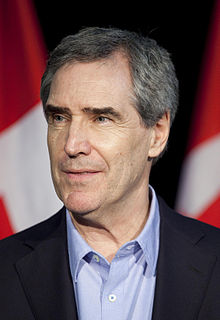
Keynote Speaker: Professor Michael Ignatieff

Keynote Speaker: Professor Michael Ignatieff

Nationalism and Globalisation
New Settings, New Challenges
23-24 May 2013
University of Edinburgh

A two-day international symposium bringing together research on the interface between nationalism and multiculturalism on the one hand and the evolving dynamics of transnational constitutionalism on the other.

Keynote address: Professor Michael Ignatieff

Find out more and register for this event at http://bit.ly/12mx5JC


Posted in Events | Leave a comment

The new poll tax? The bedroom tax, welfare reform and independence

Dr. Nicola McEwen, Academy of Government

Dr. Nicola McEwen, Academy of Government

Dr Nicola McEwen, ESRC Senior Scotland Fellow, reflects on the welfare turn in the independence debate. She raises doubts about the prospects that the bedroom tax can play as important a role as the poll tax in the campaign for greater Scottish self government.

The issue of welfare reform has taken centre stage in the campaign for Scottish independence. YES campaigners clearly regard it is a symbol of all that is wrong with the Union, and an opportunity to mobilise support for independence.

The UK government’s welfare reforms span a wide range of social security measures which streamline the tax and benefit system, restrict benefit entitlement and cut the real terms value of many benefits. But the so-called ‘bedroom tax’ has assumed a symbolic significance in the debate. From 1 April, it imposes a financial penalty for under-occupancy on housing benefit claimants living in the social rented sector, by withdrawing 14% of housing benefit for one extra bedroom and 25% for two or more. In her speech to the SNP’s spring conference, the Deputy First Minister, Nicola Sturgeon, described it as ‘one of the worst policies introduced in Scotland since the poll tax.’

The welfare turn in the independence debate today is certainly reminiscent of the symbolic role played by the poll tax in the campaign for a Scottish Parliament in the late 1980s and 1990s. Introduced to Scotland by Mrs Thatcher’s government in 1989 – a year earlier than in England and Wales – the community charge, as it was officially named, was a replacement for domestic property rates. The tax rate was set by local authorities and was intended to make them directly accountable to taxpayers for the services and infrastructures they provided. But as a flat rate tax levied on individuals, it had profoundly regressive implications, sparked mass non-payment campaigns, and was replaced by the council tax in 1993. Yet, even years after it was abolished, the poll tax still featured in the 1997 devolution referendum, and was used effectively by Scotland Forward, the official YES YES campaign, as a symbol to reinforce the need for Scottish self government.

Can the bedroom tax – and welfare reform more generally – be the game-changer that might shift opinion towards a YES vote in the 2014 referendum? YES campaigners clearly think so, and miss few opportunities to highlight the inequities of UK welfare reform in contrast to the promise of a fairer, more socially just, Scotland after independence.

Can the bedroom tax – and welfare reform more generally – be the game-changer that might shift opinion towards a YES vote in the 2014 referendum?

They may be right. Welfare state institutions and services have been utilised as tools in nationalist politics before, with some success – a phenomenon I described in my research as welfare state nationalism. Welfare retrenchment weakens the ties that bind citizens to the state, and can reduce the feelings of risk associated with constitutional change and independence.

In the Québec referendum in 1995, which saw the YES side defeated by the narrowest of margins, pro-independence campaigners contrasted the welfare retrenchment and deficit-reduction policies of the then Canadian federal government with their projet de société – a vision of a more socially progressive, independent Quebec. In Scotland, too, the defence of a social democratic welfare state – and the feeling that it was under attack during the years of Conservative rule – was not just a key feature of the campaign for a Scottish Parliament. Surveys taken after the devolution referendum revealed that the YES majority was in part a result of high expectations that the parliament would deliver better public services and a fairer society.

There is no doubt that the welfare reforms of the current government are creating deep unease within large sections of civil society, especially those bodies who work most closely with the communities and citizens most affected by the changes. Public opposition, too, was evident in the weekend protest marches. But, whether this unease can shift opinion towards independence is more questionable, for several reasons.

First, the experience of devolution may have diminished confidence that constitutional change alone can transform society. At the time of the referendum in 1997, expectations of what devolution could deliver were very high, but successive Scottish Social Attitudes Surveys since then reveal a less rosy picture. While few believe that things are worse, most Scots appear to believe that the parliament has made little difference to the quality of health, education and the economy, for example.

Second, in the devolution campaign, there was a broad consensus among those on the social democratic left that social democracy and self-government went hand in hand. This was reinforced by the feeling of injustice created by the early introduction of the poll tax in Scotland. There is no distinctively Scottish dimension to the welfare reforms of today. Nor is there a social democratic consensus for constitutional change; those defending a social democratic welfare state today span the YES and NO campaigns. The UK General Election will be less than eight months after the referendum, and we might expect the Labour Party to have stepped up its critique of UK welfare reforms. Their main focus will be a change of government at Westminster, not a change in the constitutional status of Scotland.

Third, Scottish policy choices in an independent Scotland might be underpinned by a distinctive set of values and priorities, but they would still be constrained  by many of the pressures that have contributed to rising social security costs across many countries. Within the EU, social protection accounts for the highest proportion of government expenditure, followed by health and general public services. These costs are fuelled by an ageing population, economic pressures, and higher expectations and costs of providing public services, often coupled with a reluctance to pay higher taxes that might contribute towards meeting these pressures. It is reasonable to assume that any party elected to govern an independent Scotland would want to contain the extent to which social welfare services consume available budgets.

Of course, change can be achieved in ways that don’t necessarily involve more spending, and there are interesting debates within civil society about the opportunities self government would create, for example, in giving greater opportunities for preventative spending as recommended by the Christie Commission.

But change will not be easy, and nor would an independent Scotland begin with a ‘clean sheet of paper’, as suggested by Blair Jenkins, Yes Scotland Chief Executive, in a recent article in Scotland on Sunday. Institutions and practices have a way of becoming embedded, often generating powerful interests in favour of continuity over change. The rest of the UK – and England in particular – will remain a reference point for Scotland with or without independence. A desire for welfare services and benefits to be at least as good as those south of the border could also militate against change.

Finally, the SNP government’s vision of independence sees it developing alongside a continued common labour market and common travel area, allowing for the free movement of people and services. These commonalities would have implications for a range of policies, including social security provision, pensions, employment and labour market regulation. An independent Scotland might not have the bedroom tax, but there would be other continuities in the welfare system. There is a likelihood, too, that the independence proposals will include some shared arrangements with the UK government over the delivery – if not the design – of some benefits.

The greater the interdependencies and continuities, the less scope there may be for doing things differently, even with political independence.

The greater the interdependencies and continuities, the less scope there may be for doing things differently, even with political independence. The degree to which such continuities are envisaged in the arena of social security and welfare awaits further details, but this could pose a further constraint on the likelihood that UK welfare reform may be the game-changer in the referendum campaign that advocates of independence hope it will be.

Dr Nicola McEwen is Director of Public Policy at the Academy of Government, and ESRC Senior Scotland Fellow. She is undertaking a research fellowship, entitled ‘Between autonomy and interdependence: Scottish independence and intergovernmental co-ordination’, as part of the ESRC Future of the UK and Scotland programme.

Posted in Welfare and Social Policy | 2 Comments

Answering the West Lothian Question

Charlie Jeffery, University of Edinburgh

Charlie Jeffery, University of Edinburgh

Professor Charlie Jeffery of the University of Edinburgh describes the process behind the McKay Commission report, an important step forward in answering the West Lothian Question. 

THE McKay Commission on the Consequences of Devolution for the House of Commons publishes its report today.

The commission’s formal title may not be one to set pulses racing in Scotland, but its subject matter is nothing less than the West Lothian Question – that old conundrum about MPs from Scotland voting at Westminster on laws that apply in England when MPs from England cannot vote on laws that apply in Scotland in matters that have been devolved to Holyrood.

Of course, the issue is not just about Scotland. As devolution has stabilised in Northern Ireland and been much strengthened over the last few years in Wales, a growing proportion of the content of Westminster legislation now applies in England alone. Yet procedures for making laws at Westminster have not changed significantly as a result of devolution. Currently, laws that apply UK-wide and those that apply in England alone are dealt with in the same way.

We came to the view that this was wrong. We felt it was important for there to be an opportunity in the Commons for MPs from England to express a collective view on matters that apply in England alone. And we felt that such a view should normally be respected by the House as a whole, and be reflected in the relevant legislation that follows.

We came to this view in the light of survey research that shows a surprising level of discontent among people in England about how they are governed. Though England – which makes up 85 per cent of the UK population and provides 533 of the 650 MPs – dominates the Commons numerically, people in England do not feel dominant. They feel significantly disadvantaged.

Perceptions about Scotland play a big role in that sense of disadvantage. An overwhelming majority think that MPs from Scotland should not be involved in making laws that apply in England. And over the last few years, around ten times as many people in England think that Scotland gets more than its fair share of public spending than those who think it gets less than its fair share. And when it comes to England’s “fair share”, there is a mirror view – people in England think that England gets a bad deal.

Similarly, many more people in England think that Scotland’s economy benefits more from being part of the UK than those who think England’s economy benefits (it should be said these views about spending and economic benefit are not shared by most Scots).

There is a sense – as in Scotland in the 1980s and 1990s – that the legitimacy of governing arrangements is now in question in England. It is for that reason we have recommended changes in procedure in the Commons that will enable an English voice to be expressed on matters that affect England alone.

We are confident today’s report will help produce a more visible form of public debate about English issues that can better reconnect people in England to their political system.

Charlie Jeffery is professor of politics at the University of Edinburgh and was a member of the Commission on the Consequences of Devolution for the House of Commons. This piece was originally published in the Scotsman on 25 March 2013. 

Posted in Constitution | Leave a comment

Event: Debating Scottish science, innovation and independence

Edinburgh International Science Festival

Edinburgh International Science Festival

Scotland’s science base is excellent, but we are less successful at translating this to a vibrant and profitable high-tech industry-based economy. Opinions are sharply divided about how scientific research and Scotland’s future economic success, as it builds on technological innovation, would be affected by “devo-max” or total independence.

Would our innate creativity be unleashed, enabling us to reach new heights of innovation-based prosperity, or would we struggle to maintain our present position? These very important questions do not feature highly in public debates, although they are beginning to be hotly debated among academics, industry and government bodies in Scotland and Westminster.

Join Innogen for a discussion among leaders of Scottish science and industry, putting forward and justifying both side of the independence debate and exploring the futures they envisage for Scotland. Speakers include Professor Hugh Pennington and Iain Gray MSP to discuss issues from a ‘better together’ standpoint, and Colin Macilwain and Allan MacAskill to discuss issues from a pro-independence standpoint. The debate will be moderated by BBC Scotland Science Correspondent Ken Macdonald.

Presented by the ESRC Innogen Centre
Monday, 1 April 2013 at 8:30pm
Teviot Row Dining Room
£8/£6, tickets available for purchase at www.sciencefestival.co.uk


Posted in Events | 1 Comment